
Expanded polystyrene (EPS) foam is widely used across many industries, but managing EPS waste has become a growing challenge. Because EPS is extremely lightweight yet bulky, it takes up large amounts of space and creates high transportation and disposal costs. As a result, many businesses are turning to EPS foam densifiers to improve recycling efficiency.
To better understand this solution, it is important to first look at what an EPS foam densifier is, how it works, and why it plays such an important role in modern recycling systems.
To begin with, EPS foam is commonly found in packaging, insulation, appliances, and construction materials. While it provides excellent protection and thermal performance, it creates serious problems once it becomes waste. Loose EPS foam occupies a large volume, even though it weighs very little.
Because of this, storing EPS waste requires significant space, and transporting it often costs more than the material itself is worth. In many regions, landfill disposal fees continue to rise, making EPS waste management even more expensive. Therefore, reducing EPS volume before recycling is not optional—it is essential.
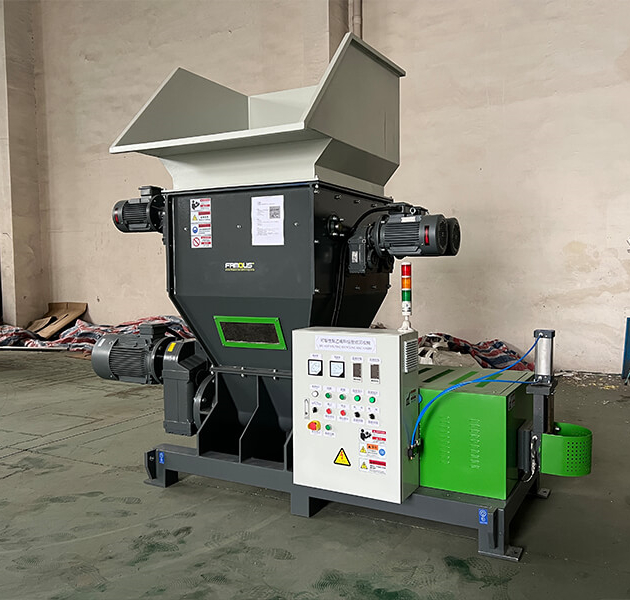
An EPS foam densifier, also known as an EPS densifier machine, foam densifier, or Styrofoam densifier, is a specialized recycling machine designed to reduce the volume of EPS foam by applying heat and pressure.
Rather than simply compressing the foam, an EPS foam densifier melts and reshapes it into a dense, solid form. This process dramatically reduces volume and transforms bulky EPS waste into a material that is easier to store, transport, and recycle.
In simple terms, densifying is different from compacting. Compacting squeezes foam into blocks while keeping its original structure, whereas densifying changes the foam into a much denser, solid output.
After understanding the definition, the next step is to look at how an EPS foam densifier operates in real-world conditions.
First, EPS foam waste is collected from sources such as packaging lines, warehouses, electronics factories, or construction sites. Before processing, the foam is usually sorted and cleaned to remove contaminants like tape, labels, or dirt. This preparation step helps ensure smooth operation and consistent output quality.
Next, the prepared EPS foam is fed into the densifier. Inside the machine, several steps occur in sequence:
Compression: The foam is pushed forward under controlled pressure.
Heating: Heat softens and melts the EPS foam, allowing it to lose its original air-filled structure.
Extrusion: The melted material is forced through a forming chamber, where it becomes dense and compact.
Cooling: Finally, the densified EPS cools and solidifies into blocks or logs.
As a result, the output is a solid, high-density EPS block or log. This densified EPS is ready for storage, transportation, or further recycling.
At this point, it is helpful to clarify what densified EPS actually is. Densified EPS refers to expanded polystyrene that has undergone a densification process to significantly increase its density.
By applying heat and pressure, the air inside the foam beads is removed, and the material becomes compact and rigid. Compared to loose EPS, densified EPS is much easier to handle and far more cost-effective to move.
Because of these properties, densified EPS is widely accepted by recycling facilities and can be reused as raw material in manufacturing applications.
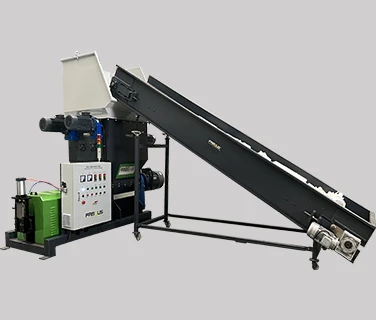
From a business perspective, EPS foam densifiers offer several clear advantages.
First and foremost, EPS foam densifiers can reduce EPS volume by up to 90–95%. This dramatic reduction saves valuable floor space and simplifies waste handling.
Lower Waste Handling and Transportation Costs
With reduced volume, businesses need fewer waste collections and shipments. As a result, transportation costs decrease, and overall waste management becomes more predictable and affordable.
In addition, densified EPS has higher value than loose foam. Recycling companies prefer dense material because it is easier to process. This means businesses may recover part of their investment through recycling revenue.
Finally, densifying EPS helps divert foam waste from landfills. By making EPS recycling practical and efficient, densifiers support sustainable waste management and circular economy goals.
Although both machines reduce EPS volume, they serve different needs.
An EPS foam compactor uses cold compression to squeeze foam into blocks, but the foam structure remains intact. In contrast, an EPS foam densifier melts the foam and produces much denser output.
In general:
Densifiers achieve higher density and better resale value
Compactors use less energy and have simpler operation
Therefore, densifiers are typically chosen when maximum volume reduction and recycling value are required, while compactors may be suitable for basic volume control.
EPS foam densifiers are used across many industries. For example:
Packaging and manufacturing: Managing packaging waste efficiently
Construction and insulation: Processing EPS insulation offcuts
Logistics and warehouses: Reducing bulky packaging foam
Recycling facilities: Preparing EPS for downstream recycling
These applications highlight how densifiers fit into both industrial and commercial recycling systems.
Generally speaking, EPS foam densifiers are ideal for businesses that generate large volumes of EPS waste. Companies facing high storage costs, frequent waste pickups, or sustainability targets can benefit significantly from densification equipment.
Recycling centers and organizations focused on long-term waste reduction strategies also find densifiers essential for improving material value and operational efficiency.
Before selecting equipment, businesses should consider several practical factors:
Daily EPS foam volume
Available installation space
Energy consumption and operating costs
Output requirements from recycling partners
Ease of maintenance and operation
Working with an experienced EPS foam densifiers supplier can help ensure the equipment matches specific recycling needs.
In today’s recycling landscape, efficiency and cost control are more important than ever. EPS foam densifiers play a key role by transforming difficult-to-handle waste into a manageable and valuable resource.
By reducing volume, lowering logistics costs, and supporting recycling, densifiers help businesses build more sustainable waste management systems.
In summary, an EPS foam densifier is a practical and proven solution for managing EPS foam waste. By converting bulky foam into dense, recyclable material, it helps businesses save space, reduce costs, and improve environmental performance.
If you are looking for a reliable EPS foam densifiers supplier, Famous Machinery offers professional EPS recycling solutions designed to meet real-world industrial needs. Welcome to contact Famous Machinery to learn how the right densifier can improve your EPS recycling efficiency and support your sustainability goals.



Email: [email protected]
Whatsapp/wechat: +8618915721292
Liangfeng Packaging Industrial Zone, Yangshe Town, Zhangjiagang City, Jiangsu Province, China.


