
As companies look for better ways to handle EPS waste, two machines often come up: the EPS foam compactor and the EPS foam densifier. At first glance, they may look similar because both reduce the volume of expanded polystyrene. However, they work in different ways and deliver different results. Understanding these differences is important for choosing the right solution for recycling operations.
To begin with, EPS (Expanded Polystyrene) is widely used in packaging, insulation, and logistics. While it is lightweight and protective, it takes up a lot of space during storage and transportation. Because of this, many businesses rely on EPS volume-reduction machines to make recycling easier and more cost-effective.
This leads to two common solutions: EPS foam compactors and EPS foam densifiers. Although both machines improve recycling efficiency, their methods and finished outputs are different. Before comparing them, it is helpful to first understand what each machine does.
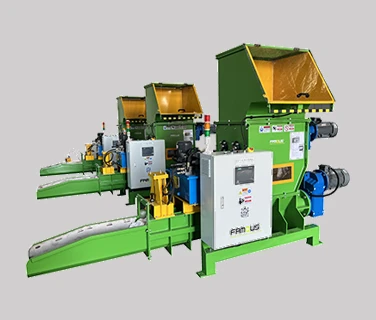
Moving into the basics, an EPS foam compactor compresses EPS foam through mechanical force. It uses a screw or hydraulic system to push foam into a compacted block. No heat is involved, which means the structure of the EPS is not melted—only compressed.
Key features of EPS foam compactors
Cold compression (no melting)
Lower energy consumption
Simple operation and maintenance
Produces compacted EPS blocks for easy transport
Because the output is still foam but in a much denser form, it is often referred to as cold-compressed EPS. These blocks can then be sold to recyclers who reprocess them into pellets.
In contrast, an EPS foam densifier uses heat plus mechanical pressure to reduce foam volume. The machine melts the foam into a molten paste, which then cools into a solid ingot. Heating allows the densifier to achieve a much higher density than a compactor.
Key features of EPS foam densifiers
Hot melting process
Higher density output
More compact and easier to store
Better for buyers who prefer melt-formed EPS ingots
Because the material is heated and melted, the final product becomes a solid, high-density EPS ingot. Many plastic manufacturers prefer this form because it is easier to process into recycled plastic products.
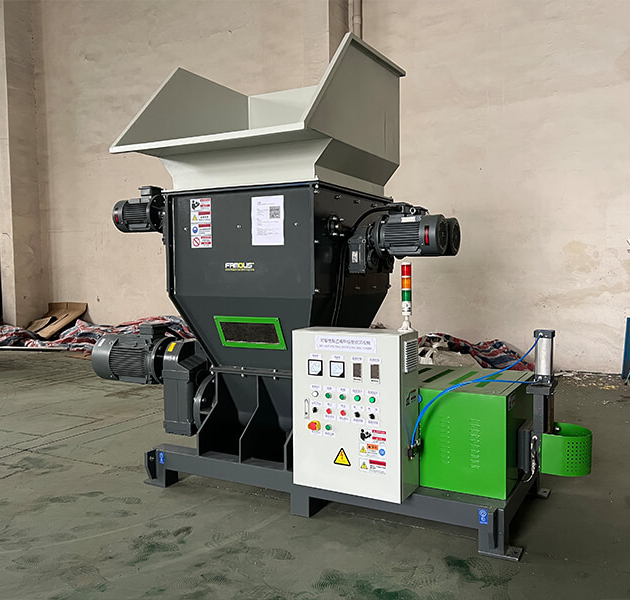
To better understand which machine is suitable for your needs, the comparison below highlights the major differences.
Compactor: Cold compression using mechanical force
Densifier: Hot melting using heat + force
Compactor: Dense but still-foam blocks
Densifier: Melted EPS ingots
Compactor: Medium density
Densifier: Very high density
Compactor: Lower energy use
Densifier: Higher because of heating
Compacted EPS: Preferred by advanced plastic factories
Melted EPS ingots: Suitable for basic recycling buyers
These differences show that the choice between a compactor and a densifier depends mainly on desired output, energy usage, and buyer requirements.
As you decide which machine fits your business, consider the following factors:
Large packaging foam and loose EPS blocks compact well in a compactor.
Mixed or highly contaminated EPS is often better suited for a densifier.
If your buyers prefer cold-compressed EPS, a compactor is enough.
If your buyers require high-density EPS ingots, a densifier is the right choice.
A compactor uses less energy and is more cost-effective.
A densifier offers higher density but with higher operating costs.
Densified ingots take less space, reducing logistics costs.
Compacted blocks require more storage room but are cheaper to produce.
With these considerations in mind, businesses can select the machine that provides the best long-term value.
Finally, selecting between an EPS foam compactor and an EPS foam densifier influences your operational efficiency, recycling revenue, and environmental impact. Each machine plays an important role in sustainable foam waste management. By choosing the right equipment, companies can reduce waste volume, cut storage costs, and improve recycling output quality.
In summary, both EPS foam compactors and EPS foam densifiers are effective tools for reducing EPS waste, but they deliver different results based on their working principles. A compactor offers simple, low-energy compression, while a densifier produces high-density ingots for higher-value recycling markets.
If you are looking for reliable, durable, and efficient EPS recycling equipment, Famous Machinery provides professional foam recycling solutions tailored to your needs. Contact Famous Machinery today to learn more or request a quote.



Email: [email protected]
Whatsapp/wechat: +8618915721292
Liangfeng Packaging Industrial Zone, Yangshe Town, Zhangjiagang City, Jiangsu Province, China.


