
Expanded Polystyrene (EPS), commonly known as foam packaging or Styrofoam, has become a critical material across manufacturing, logistics, insulation, electronics, and food packaging. Its lightweight structure, shock absorption capability, and thermal performance make it indispensable — yet at the end of its life cycle, EPS becomes one of the most problematic polymer waste streams worldwide.
Despite being 100% recyclable in theory, the global recycling rate of EPS remains low. According to material recovery studies, less than 10–12% of post-consumer EPS is successfully recycled, while the majority ends up in landfills, incinerators, or dispersed in the environment due to its light weight and fragmentation tendencies.
So, why is a recyclable material so rarely recycled? And what technological and industrial approaches can reverse this trend?
EPS is composed of 95–98% air and just a small fraction of expanded polystyrene resin. This extreme volume-to-weight ratio creates several logistical and operational challenges:
Factor | Impact on Recycling |
Very low density | High transportation cost per unit weight |
Large storage footprint | Expensive warehouse handling |
Lightweight particles | Easy to scatter, difficult to collect |
Breakability | Degrades into microplastics during handling |
Collecting 1 ton of EPS often requires handling 50–200 cubic meters of loose material — a cost structure that few recyclers can justify without densification equipment.
EPS waste is rarely clean. It is commonly contaminated with:
l Food and grease (takeout containers)
l Adhesive labels
l Corrugated cardboard and tape
l Dust and construction debris
l Other polymer foams (EPE, EPP, XPS), which are visually similar but chemically different
This contamination prevents direct reprocessing and requires dedicated pre-treatment, including sorting and surface cleaning — processes many municipal systems are not equipped for.
EPS is brittle and easily breaks into fragments during transportation and handling. These fragments can enter waterways or soil, becoming microplastics. This not only complicates recovery but also increases environmental pressure to regulate or ban EPS instead of recycling it.
Virgin polystyrene pellets cost relatively little to produce. Meanwhile, raw unprocessed EPS waste has almost no commercial value without densification or pelletizing. This lack of economic incentive explains why traditional recycling frameworks avoid the material.
Only after processing — particularly extrusion pelletizing — does recycled EPS become valuable feedstock for:
l Injection molding
l Extruded panels
l Frame profiles
l Lightweight composite products
Unlike PET bottles or HDPE containers, EPS cannot simply be crushed and re-melted. Effective recycling requires a multi-stage engineered workflow:
l Collection and sorting
l Crushing into uniform particle size
l Cold compactor or hot melting densifier
l Pelletizing through extrusion
l Manufacturing into secondary products
Without specialized recycling equipment, this workflow is economically impossible.
The key to making EPS recycling viable is volume reduction and material transformation — turning lightweight, low-value waste into high-density, standardized raw material.
This is where modern recycling technology manufacturers such as Suzhou Famous Machinery Company provide solutions that make EPS recycling scalable and commercially viable.
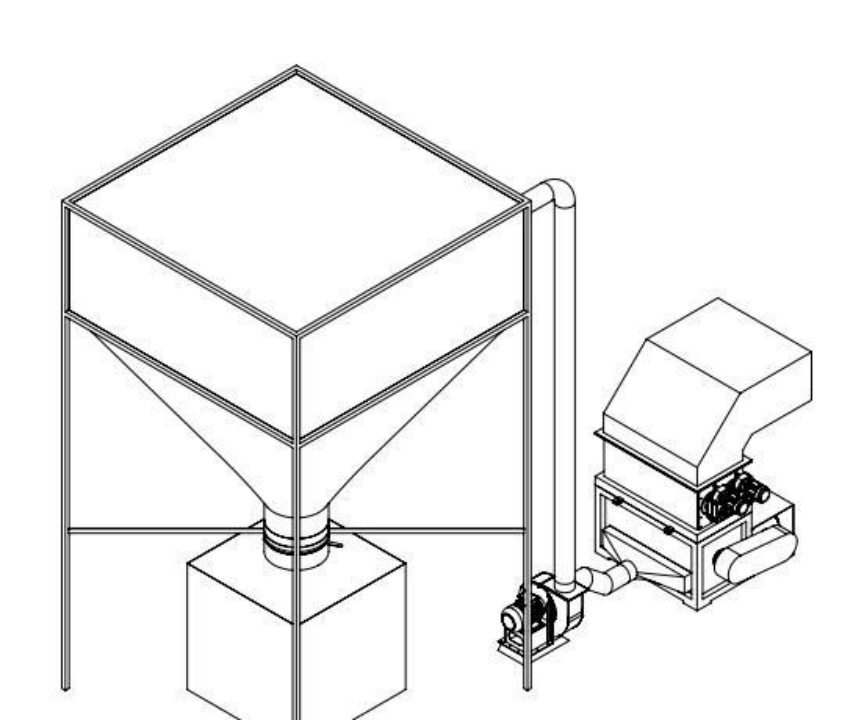
The Foam Crusher from Famous Machinery Company enables uniform particle reduction for EPS, EPE, EPP, and XPS. The crushing step:
l Increases material bulk density
l Ensures consistent feedstock for densifiers or extruders
l Prevents clogging and uneven melting during later processing
l A properly engineered crushing stage can increase downstream efficiency by 30–50%.
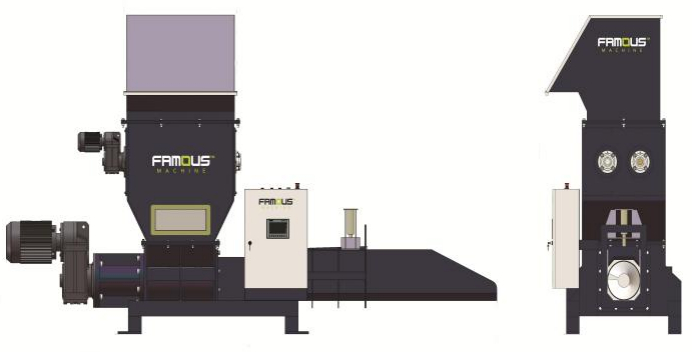
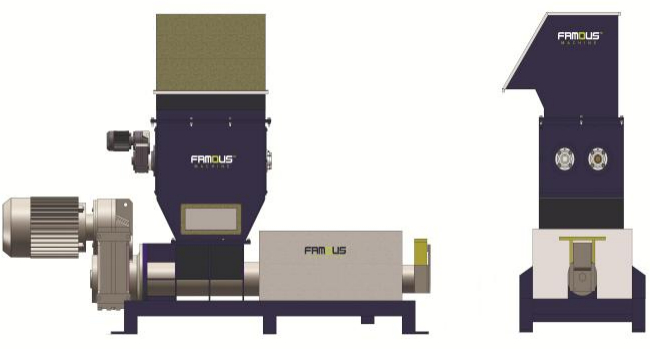
Densification is the turning point of economics. Famous Machinery offers two major densification approaches:
l Mechanical compression
l Reduces volume by 40:1 – 50:1
l Suitable for logistics hubs, retail chains, and distribution centers
l Thermal melting + extrusion
l Volume reduction up to 90:1
l Produces dense ingots with stable resale market value
The Foam Densifier Series by Famous Machinery integrates both crushing and thermal extrusion to produce clean, compact, high-density EPS blocks suitable for export or further pelletizing.
Step 3 — Pelletizing: Turning EPS Waste Into a Manufacturing-Grade Polymer
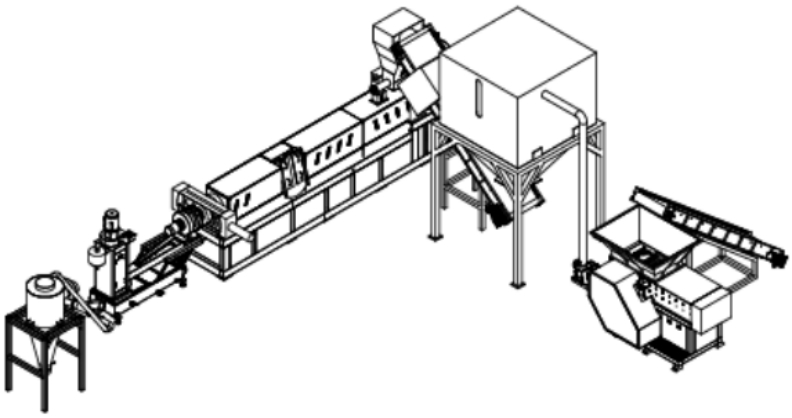
For companies seeking full circular utilization, Famous Machinery Company provides complete EPS Pelletizing System, enabling recycled EPS to be refined into uniform granules.
These pellets can replace virgin PS in manufacturing applications such as:
l Picture frames
l Thermal insulation boards
l Hangers
l Decorative moldings
l Injection-molded components
In many industries, recycled EPS can replace 20–100% of virgin PS depending on performance requirements.
Toward A Scalable Circular EPS Ecosystem
To make EPS recycling mainstream, technology alone is not enough. A scalable system requires:
l Producer responsibility programs (EPR)
l Standardized recycled EPS quality specifications
l Dedicated logistics collection infrastructure
l OEM adoption of recycled PS feedstock
l Public and industrial awareness of recyclability
When these elements align, EPS can transition from an environmental burden into a stable industrial resource stream.
Conclusion
EPS is not inherently non-recyclable — it has historically been economically and logistically inefficient to recycle. The combination of low density, contamination, fragmentation, and lack of processing infrastructure has kept recycling rates low.
However, with modern engineered recycling systems — crushers, compactors, densifiers, and pelletizing lines like those offered by Famous Machinery Company — EPS recycling becomes economically feasible, scalable, and profitable.
The future of EPS waste is not landfill or incineration — it is industrial circular reuse.



Email: [email protected]
Whatsapp/wechat: +8618915721292
Liangfeng Packaging Industrial Zone, Yangshe Town, Zhangjiagang City, Jiangsu Province, China.


