
As plastic film materials are widely used in packaging, agriculture, and logistics, large amounts of PP and PE film waste are generated every day. However, these materials are often contaminated with dirt, oil, sand, and moisture, which makes direct recycling difficult. For this reason, a proper cleaning process is required before further processing. In practice, a PP/PE film washing line plays a key role in turning dirty plastic waste into clean flakes suitable for pelletizing.
To better understand the process, it is important to define the system. A plastic film washing line is a complete recycling system designed to clean waste PP and PE films through multiple stages. Its main function is to remove impurities, reduce moisture content, and prepare materials for the next stage, such as pelletizing. As a result, the output becomes clean and uniform plastic flakes that can be reused in manufacturing.
Before going into each step, it is helpful to look at the overall workflow. In general, the process includes feeding, crushing, friction washing, water washing, dewatering, drying, and storage. Each stage is connected and works continuously to ensure stable production. With this overview in mind, the following sections explain each step in detail.
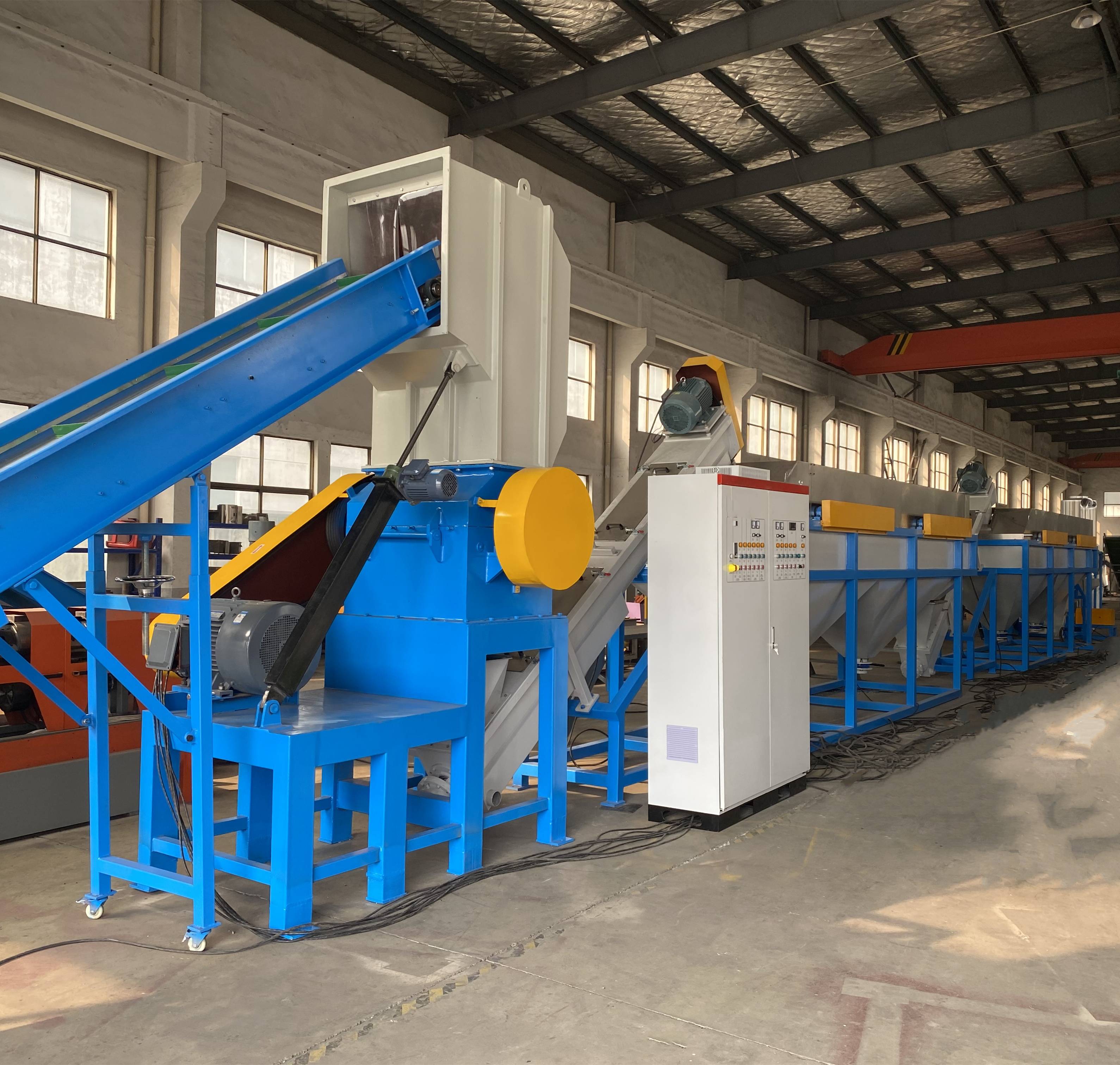
At the beginning of the process, waste plastic film is transported into the system using a belt conveyor. This step ensures a steady and continuous material flow, which is important for maintaining efficiency. In addition, conveyors help reduce manual handling and improve overall operational safety.
After feeding, the material enters the plastic crusher. At this stage, large pieces of film are cut into smaller, more uniform sizes. This size reduction is necessary because smaller pieces are easier to wash and process. As a result, crushing improves the efficiency of the entire plastic film recycling line.
Once the material is crushed, it moves to the friction washing stage. Here, a screw friction washer uses high-speed rotation and mechanical friction to remove surface contaminants such as dirt, oil, and labels. This step is especially important because it performs deep cleaning and prepares the material for further washing.
Following friction washing, the material enters a washing tank filled with water. In this stage, the principle of density separation is used. Plastic film floats on the surface, while heavier impurities sink to the bottom. This process helps improve material purity and removes remaining contaminants effectively.
To further enhance cleaning quality, a second round of friction washing and water washing is often applied. This additional stage ensures that even heavily contaminated film can be properly cleaned. As a result, the final flakes meet higher quality standards required for recycling and pelletizing.
After washing, the clean material is transported by a screw feeder. This equipment ensures a stable and controlled feeding rate into the next stage. By maintaining consistent flow, it helps the entire system run smoothly and efficiently.
Next, the material may pass through a dewatering machine. This step removes a large portion of water through mechanical force. Although optional, dewatering is highly recommended because it reduces the load on the drying system and improves energy efficiency.
In some cases, a plastic squeezing machine is used for further moisture reduction. This equipment not only removes water but also slightly compacts the material. As a result, the moisture content is lowered significantly, which is beneficial for the next processing stage.
Finally, the material enters a hot air drying system to remove any remaining moisture. After drying, the clean plastic flakes are stored in a storage silo. At this point, the material is ready for pelletizing or direct reuse. This final step ensures that the output is stable and easy to handle.
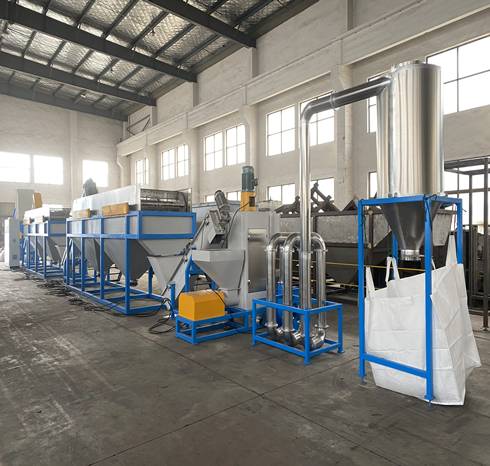
In real production environments, flexibility is important. A PP/PE film washing line can be arranged in an “L” or “U” shape depending on the workshop layout. In addition, the system can be customized based on the type of material, contamination level, and production capacity. This modular design allows businesses to build a solution that fits their specific needs.
By using a well-designed washing line, businesses can achieve several benefits. First, it significantly improves the cleanliness of recycled materials, which leads to higher-quality pellets. Second, it reduces equipment wear and improves system stability. Third, it lowers operating costs by improving efficiency and reducing waste. Overall, a complete plastic recycling washing line helps maximize resource recovery and operational performance.
In summary, the step-by-step process of a PP/PE film washing line transforms contaminated plastic film into clean and reusable flakes. Each stage, from crushing to drying, plays a vital role in ensuring high-quality output. With the right system in place, waste plastic film can be effectively converted into valuable raw material for further recycling.
If you are looking for a reliable PP/PE film washing line, Famous Machinery provides complete and customizable recycling solutions. Our systems include belt conveyors, crushers, friction washers, washing tanks, dewatering machines, squeezing dryers, and storage silos, all designed for stable and efficient operation.
With flexible layout options and tailored configurations, Famous Machinery helps you handle different types of plastic film waste and achieve high-quality output for pelletizing. Contact Famous Machinery today to get a customized plastic film recycling solution that fits your production needs.



Email: [email protected]
Whatsapp/wechat: +8618915721292
Liangfeng Packaging Industrial Zone, Yangshe Town, Zhangjiagang City, Jiangsu Province, China.


