
As the use of thermal insulation materials continues to grow worldwide, XPS foam has become a common material in construction and industrial applications. However, once XPS boards reach the end of their service life, they often turn into bulky waste that is difficult to handle. For this reason, recycling XPS foam is not only an environmental responsibility but also a practical way to reduce disposal costs and recover valuable resources.
Before discussing the recycling process, it is important to understand the main challenges. XPS foam has a very low density, which means transporting unprocessed foam is costly and inefficient. In addition, XPS boards are relatively hard compared with EPS, so stronger crushing and compression equipment is required. Without proper processing, recycling XPS foam is neither economical nor practical. Therefore, an effective recycling solution must focus on size reduction and densification.
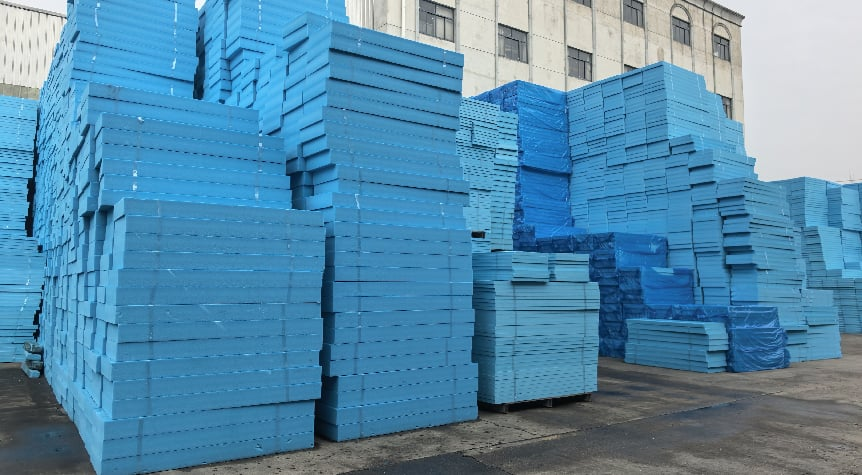
The first step in XPS foam recycling is proper collection and sorting. Waste XPS boards should be separated from other construction debris such as wood, metal, and concrete. Removing contaminants at this stage helps protect recycling equipment and improves the quality of recycled material. Once sorted, the foam can be prepared for mechanical processing.
After sorting, XPS foam needs to be crushed into smaller pieces. This step is necessary because large boards cannot be compressed or melted efficiently. An XPS foam crusher is designed to break rigid foam sheets into uniform fragments. By reducing the size of the material, crushing improves feeding consistency and prepares the foam for the next stage of recycling. This step also helps achieve better compression results later in the process.
Once the foam has been crushed, volume reduction becomes the key focus. There are two commonly used methods: cold press compaction and hot melt densification.
Cold press XPS compactors use screw extrusion and hydraulic pressure to compress crushed foam into dense blocks. With a compression ratio of up to 50:1, this method significantly reduces volume without heating the material. It is energy-efficient, produces no waste gas, and is suitable for facilities that prioritize environmental performance and low operating costs.
For applications that require even greater volume reduction, hot melt technology is often used. XPS hot melting machines heat the crushed foam until it softens and then extrude it into dense blocks or ingots. With compression ratios reaching up to 90:1, this method greatly reduces storage and transportation costs. Because of its high efficiency and stable output, hot melt densification is widely used in large-scale XPS recycling operations.
In some recycling workflows, compressed or melted XPS material is further processed into plastic pellets. An XPS pelletizer converts the processed foam into PS granules that are easy to store, transport, and reuse. These recycled pellets can be used as raw material for producing new plastic products or insulation-related components. This step adds value to the recycled material and supports a closed-loop recycling model.
Recycled XPS foam can be reused in various applications, depending on its processing level. Compacted blocks are often sold to recycling plants, while pelletized PS granules can be used in manufacturing plastic products or blended with virgin materials. Through proper recycling, XPS waste is transformed from a disposal problem into a usable industrial resource.
Recycling XPS foam brings clear environmental benefits by reducing landfill waste and lowering carbon emissions associated with raw material production. From an economic standpoint, volume reduction lowers transportation costs, and recycled materials create new revenue opportunities. For construction companies and recycling operators, this makes XPS recycling both environmentally responsible and financially practical.
Because recycling needs vary, choosing the right equipment is essential. Factors such as waste volume, available space, energy requirements, and end-product goals all influence the selection of crushers, compactors, hot melting machines, and pelletizers. A well-designed XPS recycling solution should balance efficiency, cost, and long-term operational stability.
In summary, recycling XPS foam is a step-by-step process that includes collection, crushing, volume reduction, and optional pelletizing. Each stage plays a critical role in making recycling efficient and economical. By using the right equipment and process, XPS foam waste can be converted into reusable materials instead of being discarded.
For the customers looking to build a reliable and efficient XPS foam recycling system, Famous Machinery can help reduce foam waste volume, improve recycling efficiency, and turn XPS foam into valuable reusable resources.



Email: [email protected]
Whatsapp/wechat: +8618915721292
Liangfeng Packaging Industrial Zone, Yangshe Town, Zhangjiagang City, Jiangsu Province, China.


