
Recycled PP/PE pellets are in growing demand across industries such as packaging, automotive parts, and construction materials. However, many recycling plant operators struggle with inconsistent pellet quality — problems like black specks, bubbles, discoloration, and poor mechanical strength. These issues reduce the market value of recycled pellets and limit their applications.
The truth is, pellet quality does not depend on the pelletizer alone. It is the result of every step in the recycling process, starting from raw material sorting all the way through washing, drying, extrusion, and final pelletizing. This guide walks you through each stage with practical, actionable advice to help you produce better PP/PE pellets consistently.
Before diving into process optimization, it helps to understand the basic characteristics of PP and PE, because these two materials behave differently during recycling.
PP (polypropylene) has a higher melting point than PE (polyethylene). PP typically melts at around 160–170°C, while HDPE melts at approximately 130–136°C and LDPE at around 105–115°C. This difference matters when setting extruder temperatures, drying conditions, and washing parameters.
PP is also more sensitive to thermal degradation than PE. Repeated heating cycles can break down PP polymer chains faster, leading to reduced melt strength and yellowing. PE, on the other hand, is more forgiving during reprocessing but tends to carry more surface contamination, especially when sourced from agricultural film or post-consumer packaging.
Understanding these differences helps you make better decisions at every stage of the recycling line.
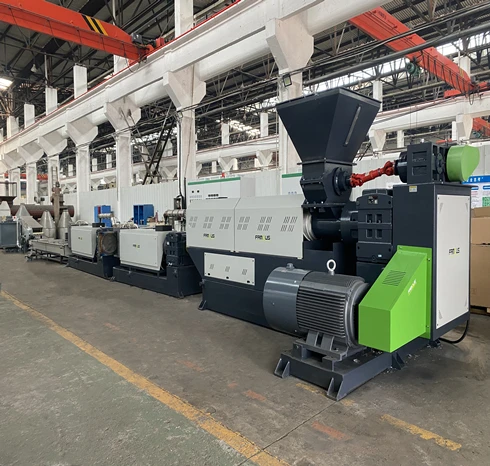
Not all PP/PE waste is the same. The type of waste you process has a direct impact on the pellet quality you can achieve, so it is important to recognize the specific challenges each waste stream presents.
Agricultural film (PE) often carries heavy contamination — soil, sand, moisture, and organic residue. This type of waste typically requires intensive washing and thorough drying before pelletizing.
PP woven bags frequently have printing ink on the surface. If not properly removed during washing, this ink causes color inconsistency and dark specks in the finished pellets.
HDPE bottles and containers may come with paper labels, adhesive residue, and caps made from different materials. Mixed materials in the feedstock lead to contamination in the final pellet.
Post-industrial scrap (factory offcuts, edge trims) is usually the cleanest source. It often requires only basic processing and can produce pellets closest to virgin quality.
Knowing your feedstock allows you to configure your washing and pelletizing equipment accordingly, rather than applying a one-size-fits-all approach.
Effective sorting is the first step toward high-quality pellets. When different types of plastic get mixed together during processing, the result is pellets with poor mechanical properties, inconsistent color, and limited market value.
For PP/PE recycling, density-based separation is one of the most practical methods. Both PP and PE are lighter than water, so a float-sink tank can easily separate them from heavier plastics like PET and PVC. However, separating PP from PE requires more advanced methods such as near-infrared (NIR) sorting, since their densities are very close to each other.
Manual sorting still plays a role in many facilities, particularly for removing large contaminants, non-plastic items, and heavily degraded material. Combining manual pre-sorting with automated systems provides the best results.
The cleaner and more uniform your input material, the easier it is to produce consistent, high-quality pellets downstream.
Many recyclers focus heavily on the pelletizer when trying to improve pellet quality, but in practice, the washing stage has a far greater impact. Contaminants that are not removed during washing will end up inside your pellets — no amount of filtration at the extruder can fully compensate for poorly washed material.
For relatively clean feedstock such as post-industrial scrap, cold washing with friction washers is usually sufficient. However, post-consumer waste — especially materials with grease, food residue, or adhesive — requires hot washing.
Hot washing uses heated water combined with a detergent solution to dissolve and remove stubborn contaminants. This step is particularly important for PP/PE film and containers that have been in contact with food or agricultural chemicals.
Friction washers use high-speed rotating paddles to create intense mechanical action between plastic flakes and water. This scrubbing effect removes surface dirt, paper fibers, labels, and fine particles that simple soaking cannot eliminate.
For best results, a PP/PE washing line should include multiple friction washing stages rather than relying on a single pass.
After the main washing stages, thorough rinsing removes any remaining detergent residue and loosened contaminants. Skipping or shortening the rinse cycle is a common mistake that leads to residue buildup in pellets.
Investing in a well-designed washing line pays for itself through higher pellet quality and better selling prices. A multi-stage washing system — with pre-washing, hot washing, friction washing, and rinsing — provides the cleanest flakes and the best foundation for quality pellets.
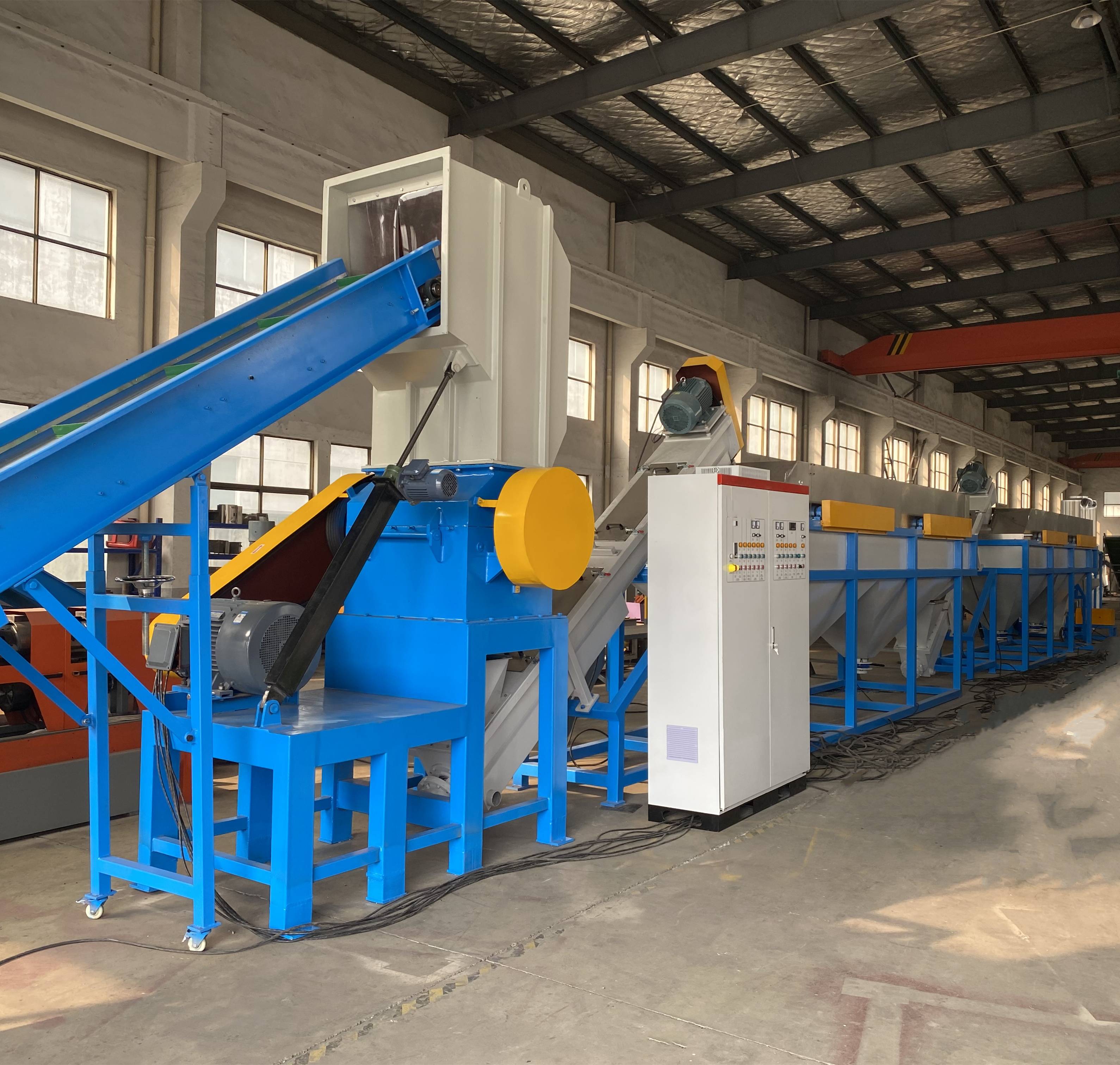
Even after thorough washing, excess moisture in PP/PE flakes can cause serious problems during pelletizing. Moisture turns to steam inside the extruder barrel, creating bubbles, voids, and surface defects in the finished pellets. It can also cause strand breakage during extrusion, reducing production efficiency.
Effective drying typically involves two stages:
Mechanical dewatering comes first. Centrifugal dryers or squeeze dryers remove the bulk of surface water quickly and with low energy consumption.
Thermal drying follows, using hot air to bring the moisture content down to acceptable levels. For PP/PE film in particular, achieving low moisture content before pelletizing is critical because film tends to trap water between layers.
If you notice bubbles or voids in your finished pellets, the drying stage is the first place to investigate.
Once your PP/PE flakes are clean and dry, the extrusion and pelletizing stage transforms them into uniform pellets. This is where temperature control, filtration, and degassing all come together.
Maintaining the correct temperature profile throughout the extruder is essential. If the barrel temperature is too high, the polymer degrades — PP in particular turns yellow and loses melt strength. If the temperature is too low, the material does not melt uniformly, resulting in unmelted particles and rough pellet surfaces.
Since PP has a higher melting point than PE, you need to adjust your temperature settings when switching between materials. Always increase temperatures gradually from the feed zone to the die, and avoid sudden temperature spikes.
A screen changer with appropriate mesh filters removes solid contaminants — small metal particles, sand, paper fibers, and carbonized material — from the melt stream. The mesh size you choose depends on your feedstock quality and your target pellet grade.
For cleaner post-industrial material, coarser screens are sufficient. For post-consumer waste, finer screens are needed, though finer filtration also creates higher back pressure and reduces throughput. Finding the right balance is key.
Continuous screen changers allow you to replace filters without stopping production, which is a significant advantage for processing heavily contaminated material.
PP/PE waste — especially film — often contains trapped air, moisture vapor, and volatile organic compounds. If these gases are not removed during extrusion, they become trapped inside the pellets as bubbles or cause surface blemishes.
Vented extruder barrels with vacuum degassing systems draw these volatiles out of the melt before it reaches the die. For processing post-consumer PP/PE film, effective degassing is not optional — it is necessary for producing acceptable pellets.
The cutting system determines the final pellet shape and uniformity. The two most common systems for PP/PE recycling are strand pelletizing and water-ring pelletizing.
Strand pelletizing is widely used for rigid PP/PE materials. The melt exits the die as strands, passes through a water bath for cooling, and is then cut into cylindrical pellets.
Water-ring pelletizing is better suited for PE film and softer materials. It produces rounder pellets and handles flexible, low-melt-strength materials more reliably.
Regardless of the system, the cutter blade must be sharp and properly aligned. Worn or misaligned blades produce irregular pellets, tailing (thin strings attached to pellets), and excessive fines.
When quality issues arise, fast diagnosis saves time and money. Here are the most common PP/PE pellet defects, their likely causes, and practical solutions:
Black specks — Usually caused by carbonized material inside the extruder barrel or contamination that passed through the filter. Clean the barrel and screw regularly, check your screen mesh size, and review your washing process.
Bubbles or voids inside pellets — Almost always caused by excess moisture or insufficient degassing. Check your dryer performance and verify that the vacuum degassing system is functioning properly.
Yellowing or discoloration — Common with PP when processing temperatures are too high or residence time in the barrel is too long. Reduce barrel temperatures and check for flow restrictions that cause material to sit in the extruder too long.
Tailing or angel hair — Thin strings or whiskers attached to pellets. Caused by incorrect cutter speed, dull blades, or improper die temperature. Sharpen or replace the cutter blades and adjust cutting speed.
Uneven pellet size — Results from inconsistent feeding, fluctuating extruder pressure, or worn cutter components. Check the feeder for bridging or surging, and inspect the cutter mechanism.
Odor — Common in post-consumer material. Caused by residual food contamination or volatile compounds. Improve washing (especially hot washing) and ensure effective degassing during extrusion.
Building a simple log of defects and corrective actions helps operators identify patterns and prevent recurring issues.
Consistent quality requires regular testing. While not every recycler needs a full laboratory, basic quality checks should be part of your routine production process.
Melt Flow Index (MFI) is one of the most important indicators for recycled PP/PE pellets. It measures how easily the melted plastic flows and directly affects how the pellets will perform in downstream manufacturing. MFI should be tested regularly and tracked batch by batch to ensure consistency.
Moisture content in finished pellets should be as low as possible. High residual moisture causes processing problems for your customers and is a common reason for rejected shipments.
Visual inspection remains a quick and effective quality check. Operators should examine pellets regularly for color consistency, surface quality, and the presence of foreign particles.
Bulk density is a straightforward measurement that indicates pellet uniformity. Significant variations in bulk density suggest inconsistent cutting or feeding.
Keeping records of these test results for each production batch helps you demonstrate quality to buyers and identify trends before they become serious problems.
One factor that many recyclers overlook is how well their washing line and pelletizing machine work together. When these two systems are properly matched in terms of throughput capacity, the entire line runs smoothly. When they are mismatched, bottlenecks occur — either the pelletizer is starved for material or washed flakes pile up waiting to be processed.
Buying your washing line and pelletizing machine from the same manufacturer has a practical advantage: the equipment is designed to work together, with matched capacities and compatible output specifications. This integration reduces setup time, simplifies troubleshooting, and helps maintain consistent pellet quality.
Beyond equipment and process settings, daily operational habits have a big impact on the quality of your output.
Keep the extruder clean. Regularly purge the barrel between material changes and during extended runs to prevent carbonized buildup.
Inspect cutter blades frequently. Dull blades are one of the most common — and most easily preventable — causes of poor pellet appearance.
Monitor water quality in your washing line. Dirty wash water redeposits contaminants onto your flakes. Change the water regularly and maintain your filtration system.
Train your operators. An experienced operator who understands the relationship between process parameters and pellet quality is your most valuable asset. Invest in regular training so that every team member can identify problems early and respond correctly.
Producing high-quality recycled PP/PE pellets is not about any single machine or magic setting. It is the result of getting every step right — from sorting and washing, through drying, extrusion, and cutting, all the way to final quality control. The most impactful improvements often come from the washing and drying stages, long before the material ever reaches the pelletizer.
By understanding your feedstock, configuring your equipment properly, monitoring quality consistently, and maintaining good daily operational habits, you can significantly raise the quality and market value of your recycled PP/PE pellets.
At Famous Machinery Company, we specialize in providing complete PP/PE recycling solutions — from washing lines to plastic pelletizing machines — all designed and manufactured in our own factory in Zhangjiagang City, Jiangsu Province, China. Because we build both washing and pelletizing systems, we ensure your entire line works together seamlessly for the best possible pellet quality.
Whether you are processing agricultural film, woven bags, rigid containers, or mixed post-consumer PP/PE waste, our engineering team can help you select the right equipment configuration for your specific needs.



Email: [email protected]
Whatsapp/wechat: +8618915721292
Liangfeng Packaging Industrial Zone, Yangshe Town, Zhangjiagang City, Jiangsu Province, China.


