
Expanded polystyrene (EPS), often called Styrofoam, is widely used in packaging, logistics, construction, and food transport. While EPS is lightweight and protective, it also creates a major challenge once it becomes waste. Its large volume takes up valuable space, increases transportation costs, and makes recycling inefficient.
To solve this problem, many businesses turn to foam densifiers or foam compactors. Although these two machines are often mentioned together, they work in different ways and serve different needs. Understanding the key differences between a foam densifier and a foam compactor is essential for choosing the right EPS foam recycling solution.
Before comparing the two machines, it is important to clarify their roles. Both foam densifiers and foam compactors are designed to reduce the volume of EPS foam. However, they achieve this goal using different operating principles, which directly affects performance, energy use, output form, and application scenarios.
With that foundation in mind, let’s look at each machine in more detail.
A foam densifier, also known as an EPS densifier or thermal densifier, is a machine that reduces EPS foam volume by applying heat and mechanical pressure. Its main purpose is to convert lightweight foam into a dense, solid form that is easier to store, transport, and recycle.
In practice, EPS foam is fed into the machine and conveyed by a rotating screw. During this process, controlled heat softens the foam, allowing it to lose its internal air structure. The softened material is then compressed and extruded through a discharge port, forming dense logs or blocks. Once cooled, the densified EPS maintains its shape and significantly reduced volume.
As a result, foam densifier machines are widely used where high output density and maximum volume reduction are required.
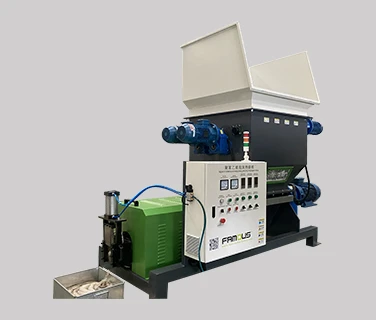
In contrast, a foam compactor reduces EPS foam volume using cold pressing or hydraulic pressure, without applying heat. This type of machine relies on mechanical force to compress the foam and eliminate its “memory,” meaning the material does not expand back to its original size.
Typically, EPS waste is first broken down into smaller pieces and then pushed forward by a screw or hydraulic system. Continuous pressure compacts the foam into dense logs or blocks. Since no heating is involved, the material structure is physically compressed rather than melted.
Because of this operating method, foam compactors are often chosen for applications that require low energy consumption, odor-free operation, or handling of wet EPS foams.
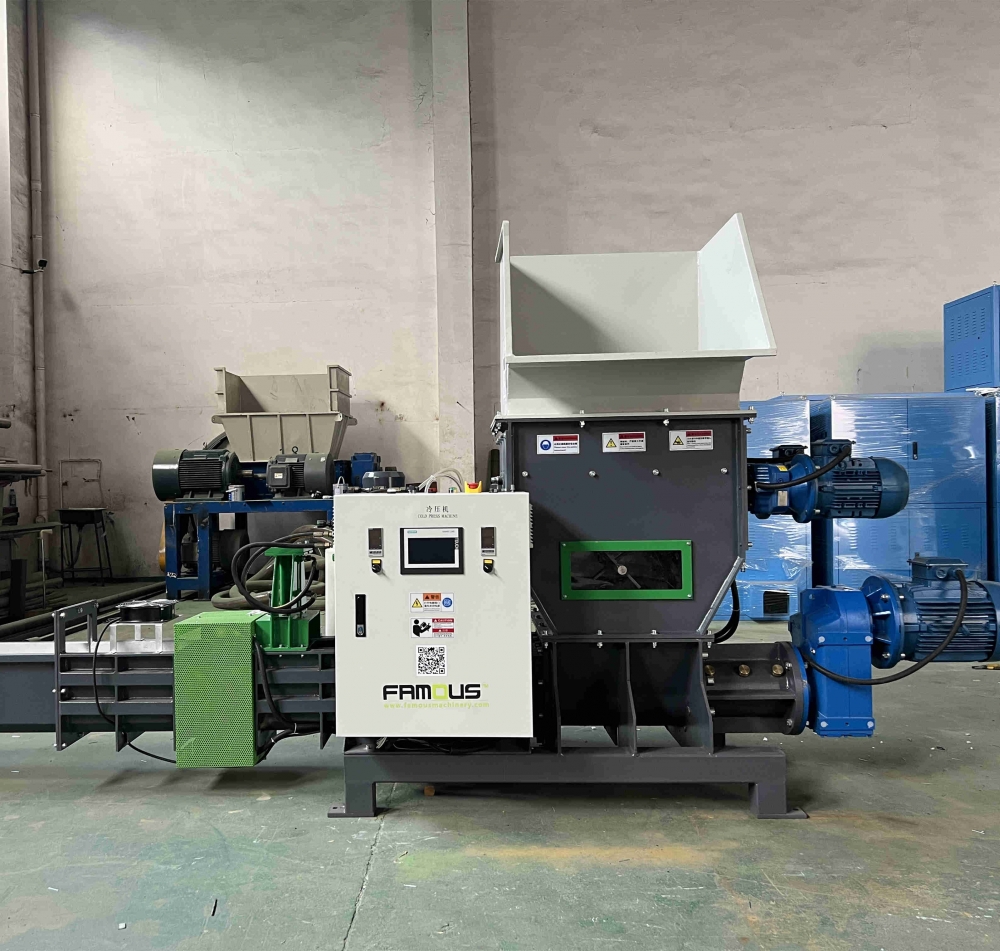
The most fundamental difference between a foam densifier and a foam compactor lies in how they work.
A foam densifier uses hot-melt technology. Heat softens the EPS, making it easier to compress into a very dense form. This method delivers high density but requires temperature control and electrical heating.
By comparison, a foam compactor uses cold mechanical or hydraulic compression. It applies pressure without changing the material’s temperature. This makes the process simpler and more energy-efficient, especially in long-term operation.
Another major difference is the density of the final output.
Foam densifiers are known for producing very high-density EPS, commonly reaching bulk densities of around 500–600 kg/m³. The output is typically solid logs or ingots that are easy to stack and transport.
Foam compactors also reduce volume effectively, but the final density is usually lower than that of hot-melt densifiers. However, the compressed foam still holds together well and remains suitable for further recycling or resale.
This distinction is important when transportation distance and storage space are key concerns.
Energy use is a practical consideration for any recycling operation.
Because foam densifiers rely on heating systems, they generally consume more electricity. While this is justified by the high density achieved, it also means higher operating costs.
On the other hand, foam compactors do not require heating. As a result, they are more energy-efficient and often cost less to run over time. For businesses with limited power supply or high daily operating hours, this can be a decisive advantage.
The working environment is another point of difference.
Foam densifiers may produce noticeable odors during the heating and melting process. Although modern systems are well-controlled, ventilation or the installation of smoke extraction devices are usually required. The advantage, however, is that hot-melt cutting produces no loose debris, keeping the site clean.
Foam compactors, by contrast, generate no smoke and no smell. This makes them suitable for indoor facilities and urban recycling centers. In addition, they can process wet EPS foams, such as fish boxes and fruit containers, without affecting performance.
Material preparation requirements also vary between the two machines.
Foam densifiers require the foam to have a relatively uniform crush size and density. The foam must be crushed to match the screw design and conveying capacity. If the pieces are too large or too small, compression efficiency and extrusion quality may be affected.
Foam compactors are generally more tolerant of mixed densities and moisture content. They can handle a wider range of EPS waste foams, making them especially suitable for municipal or mixed-source recycling programs.
When deciding between a foam densifier and a foam compactor, there is no universal answer. The right choice depends on your specific situation.
A foam densifier is often the better option when:
EPS foam is dry or even if the foam is a little dirty
Maximum volume reduction is required
High-density output is needed for resale or long-distance transport
A foam compactor is usually more suitable when:
EPS foam is relatively clean
EPS foam contains moisture
Energy efficiency is a top priority
Odor-free operation is required
Mixed-density foam waste is processed
Understanding your material type, processing volume, and operating environment will help you make a more informed decision.
Both foam densifiers and foam compactors play an important role in EPS foam recycling. While they share the same goal of reducing volume, their working principles, performance characteristics, and ideal applications are clearly different. By understanding these key differences, businesses can select equipment that improves efficiency, lowers costs, and supports sustainable waste management.
If you are looking for reliable and efficient EPS foam recycling solutions, Famous Machinery is a trusted EPS foam densifiers supplier, offering professional equipment designed for stable performance and long-term operation. Contact Famous Machinery to explore practical solutions for your EPS foam recycling needs and improve your waste handling efficiency with confidence.



Email: [email protected]
Whatsapp/wechat: +8618915721292
Liangfeng Packaging Industrial Zone, Yangshe Town, Zhangjiagang City, Jiangsu Province, China.


