
Packaging waste is an increasing concern in many industries, particularly in sectors that use expanded polystyrene (EPS) foam. EPS is lightweight and durable, making it ideal for packaging materials, but it’s notoriously difficult to recycle due to its bulky size and low density. To address this challenge, businesses are turning to foam densifiers as a solution to help streamline the recycling process and reduce the environmental impact of EPS foam waste. This article will explore how foam densifiers are used in packaging waste recycling, focusing on the benefits, operational processes, and environmental impact.
The widespread use of EPS foam in packaging—especially in the seafood, electronics, and manufacturing industries—has led to significant waste challenges. EPS foam, commonly found in packaging materials like fish boxes, appliance inserts, and protective shipping materials, makes up a large portion of packaging waste. However, its bulky nature, combined with the fact that it’s made up of 98% air, makes it inefficient to transport and difficult to recycle.
Many companies face the challenge of managing this waste effectively, especially with rising transportation costs, landfill limitations, and increased regulatory pressure to adopt sustainable practices. This is where foam densifiers come in. These machines help reduce the volume of EPS foam waste, making it easier and more cost-effective to recycle and dispose of.
EPS foam, widely used in packaging, has unique characteristics that make it challenging to handle in its raw form. Its low-density structure means it takes up a significant amount of space without weighing much. This low density makes the foam difficult to transport in large quantities, leading to higher costs for waste management.
Moreover, foam waste often comes in various forms—whether as packaging materials from electronics, insulation materials, or discarded seafood boxes. These foam materials can be contaminated with oils, dirt, and other substances, which further complicates the recycling process. To make recycling efficient, these materials need to be washed and compacted before being sent to recycling facilities. This is where foam densifiers play a critical role.
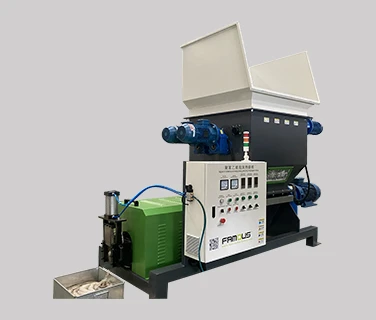
Seafood packaging is one of the largest sources of EPS foam waste. These foam fish boxes are used to maintain temperature and protect seafood during transport. However, the combination of moisture, contamination, and bulky volume makes it difficult to recycle them efficiently. With the help of foam densifiers, seafood packaging waste can be compacted into dense blocks, ready for transportation to specialized recycling stations.
Many products, such as appliances, electronics, and fragile goods, are packaged using EPS foam for added protection. The foam materials used are typically large, irregular in shape, and mixed with other materials. These types of foam waste require effective handling and compression, making foam densifiers an essential tool in packaging waste management.
EPS foam is also used in the construction industry as insulation materials. These foam panels can be difficult to recycle because of their size, rigidity, and mixed densities. A foam densifier helps reduce the volume of these rigid foam panels and prepares them for further recycling or disposal.
Traditional methods of foam disposal, such as throwing EPS foam into landfills or relying on unspecialized recycling facilities, are inefficient and unsustainable. EPS foam occupies large amounts of space in landfills, contributing to waste buildup and environmental degradation. Moreover, the transport of loose foam is costly and inefficient due to the material’s low weight-to-volume ratio.
Foam densifiers, on the other hand, offer a solution by reducing the volume of EPS foam, making it easier to transport and recycle. By compressing EPS foam into dense blocks or logs, foam densifiers help address the logistical challenges associated with foam waste disposal, making recycling more efficient and cost-effective.
A foam densifier is a machine designed to compact EPS foam waste, reducing its volume by up to 90%. The densification process involves the use of heat and pressure to transform foam into a much denser form—either as compact blocks or logs. These densifiers operate by feeding foam into a chamber where it is subjected to mechanical or thermal compression. The result is a significant reduction in volume, which makes it easier to handle, transport, and recycle.
Compared to traditional methods like compactors, which only apply mechanical pressure, foam densifiers utilize both mechanical and heat-based methods to achieve more efficient compression. The result is a denser, more manageable form of foam that can be reused or sent to recycling centers for further processing.
The process of recycling packaging foam with a foam densifier typically follows these steps:
Packaging foam waste is collected from various sources such as seafood processing facilities, electronic manufacturers, and packaging warehouses. The foam is sorted to remove contaminants like dirt, tape, or labels to ensure the densifier works efficiently.
Once the foam is prepared, it is fed into the foam densifier, where it is compressed under controlled pressure. This reduces the foam’s bulk and prepares it for densification.
In some types of foam densifiers, heat is applied to soften the foam, allowing it to be compressed more easily. The foam is then extruded through a screw, which forces it into denser forms such as blocks or logs.
After densification, the foam is cooled, solidifying it into a compact form. These dense blocks or logs are now easier to handle, store, and transport to recycling facilities for further processing.
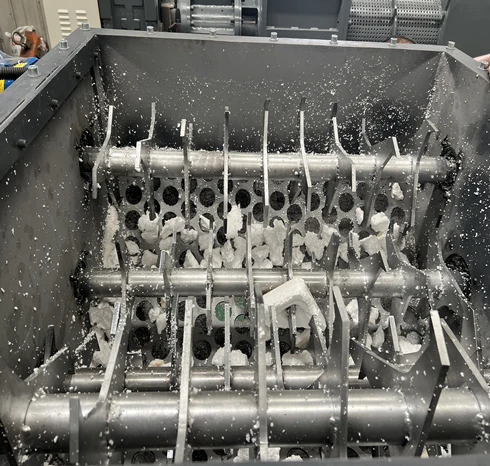
Using foam densifiers in packaging waste recycling offers several key operational benefits:
Significant Volume Reduction: Foam densifiers can reduce the volume of EPS waste by up to 90%, making storage and transportation more efficient.
Cost Savings: By compressing the foam before transport, businesses can save on transportation costs and landfill fees.
Cleaner Waste Handling: Densified foam is easier to manage, with less mess and contamination compared to loose foam.
Increased Recycling Efficiency: Densified EPS can be processed more easily at recycling facilities, improving the overall efficiency of the recycling process.
The environmental and economic value of using foam densifiers is undeniable:
Reduced Landfill Impact: By compacting foam and sending it to recycling centers, businesses can significantly reduce the amount of EPS foam that ends up in landfills.
Support for Circular Economy: Densified foam can be reused as raw material for manufacturing new products, contributing to a circular economy and reducing the need for virgin plastic production.
Lower Carbon Footprint: Reducing the volume of foam waste means fewer resources are spent on transportation, and less fuel is consumed in moving waste to recycling centers.
Once foam waste has been densified, it is much easier to transport and process. Densified EPS is taken to specialized recycling centers where it is further granulated into EPS pellets. These pellets can then be used to create a wide range of new products, including picture frames, coat hangers, and other plastic products. By recycling EPS foam, businesses can help close the loop on plastic waste and reduce the demand for new materials.
When selecting a foam densifier for packaging waste, businesses should consider the following factors:
Type of Foam: Different types of foam (e.g., wet, dry, mixed densities) may require different densifier models.
Volume of Waste: The capacity of the densifier should match the amount of foam waste generated daily or monthly.
Space and Installation Requirements: The machine should fit in the available space and work with the business’s existing power supply.
Maintenance and Durability: Choose a densifier that is easy to maintain and built for long-term use.
Foam densifiers offer a practical, efficient, and sustainable solution for packaging waste recycling. By reducing the volume of foam waste(EPS, EPE, EPP, XPS, etc.), these machines make it easier to handle, transport, and recycle packaging materials, resulting in cost savings and environmental benefits. As more industries move toward sustainable practices, foam densifiers will continue to play a crucial role in reducing foam waste and supporting circular economy efforts.
If your business is dealing with large volumes of foam waste(EPS, EPE, EPP, XPS, etc.), it's time to consider a foam densifier. At Famous Machinery, we specialize in providing high-quality foam densifiers tailored to your specific needs. Whether you're in the seafood, electronics, or construction industry, we can help you streamline your packaging waste recycling process. Contact us now for a quote and to learn more about how our foam densifiers can benefit your business.



Email: [email protected]
Whatsapp/wechat: +8618915721292
Liangfeng Packaging Industrial Zone, Yangshe Town, Zhangjiagang City, Jiangsu Province, China.


